
Treadmill Stress Test
Treadmill Stress Test Services Offered in
Your heart might feel fine at rest and struggle under demand, and the only way to know is to watch it work. A treadmill stress test does exactly that. Bulent Zaim, MD, and the team at Bay Cardiology in Annapolis and Bowie, Maryland, use treadmill stress testing to evaluate how your heart responds when your body asks more of it. Call either office or book online to set up your test.
Treadmill Stress Test FAQ's
What is a treadmill stress test?
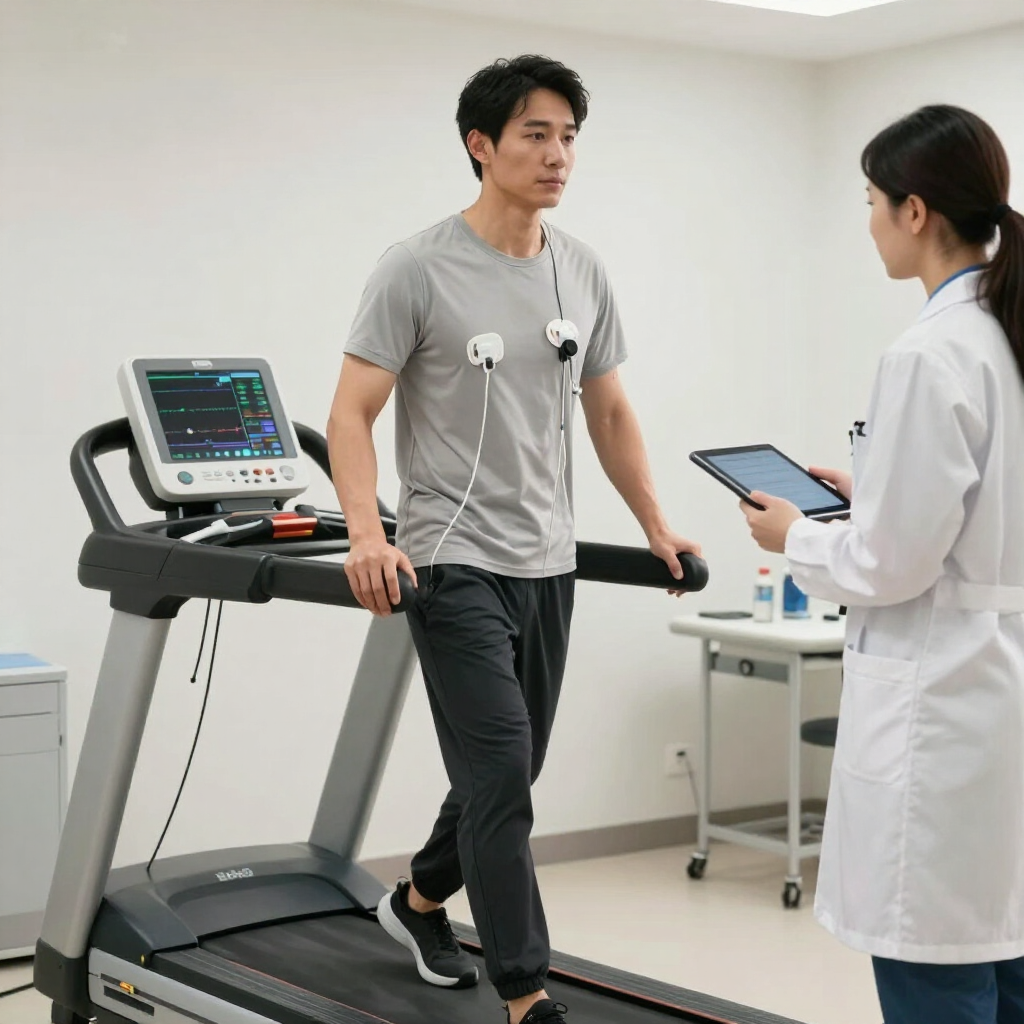
A treadmill stress test records your heart’s electrical activity while you walk and gradually jog on a treadmill. The speed and incline increase every few minutes according to a set protocol, pushing your heart rate up in stages.
Throughout the test, electrodes on your chest feed data to an electrocardiogram (EKG) machine, so Dr. Zaim can see your rhythm, rate, and any changes that appear only under physical effort.
The whole point is to catch problems your heart hides when you’re sitting in a chair.
Why would I need a treadmill stress test?
Dr. Zaim may recommend one if you have reported:
- Chest tightness or pressure during activity
- Shortness of breath that seems disproportionate to the effort
- Dizziness or lightheadedness when you exert yourself
- Palpitations that show up during exercise
A family history of heart disease with new or changing symptoms
He also uses treadmill stress tests to evaluate how well a treatment is working, to clear patients before surgery, and to establish a baseline for those starting a new exercise program with cardiac risk factors.
How do I prepare for a treadmill stress test?
Wear sneakers and comfortable clothes you can move in. Dr. Zaim may ask you to hold certain heart or blood pressure medications the morning of the test, and the office will tell you which ones when you schedule. Skip heavy meals for a couple of hours beforehand, and avoid caffeine the day of since it can affect your heart rate and skew the results.
What happens during a treadmill stress test?
A technician places sticky electrodes across your chest and connects them to the EKG. A blood pressure cuff goes on your arm. You start walking at an easy pace on a flat grade, and every three minutes or so, the belt speeds up, and the incline steepens.
The technician monitors your rhythm, blood pressure, and symptoms the entire time. You keep going until you reach your target heart rate, develop symptoms, or the EKG shows something Dr. Zaim wants to review more closely. Most patients stay on the treadmill for about 7 to 12 minutes.
After you step off, the team watches your heart rate and blood pressure settle back down. Dr. Zaim reviews the full recording and walks you through the results, often the same day.
Call Bay Cardiology or schedule online to book your treadmill stress test.